AI-Generated Mood Emails: Beyond Traditional Personalisation
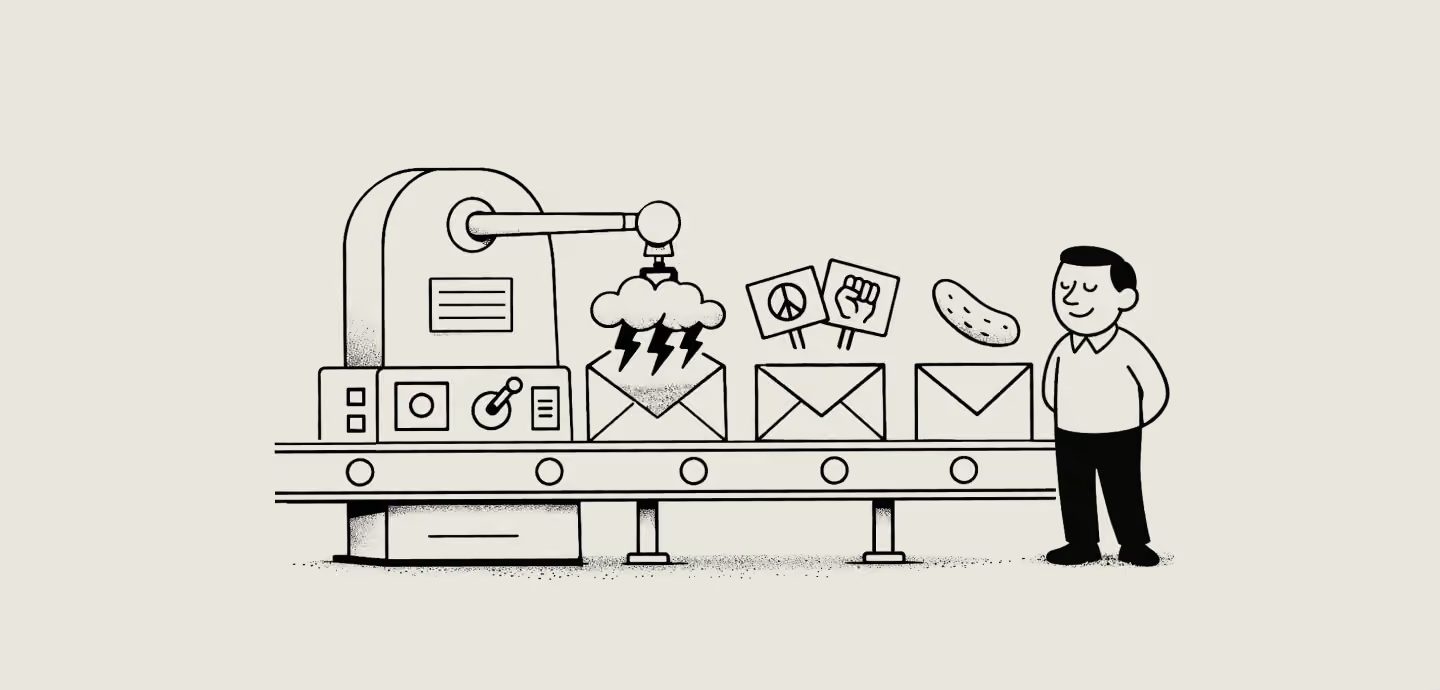
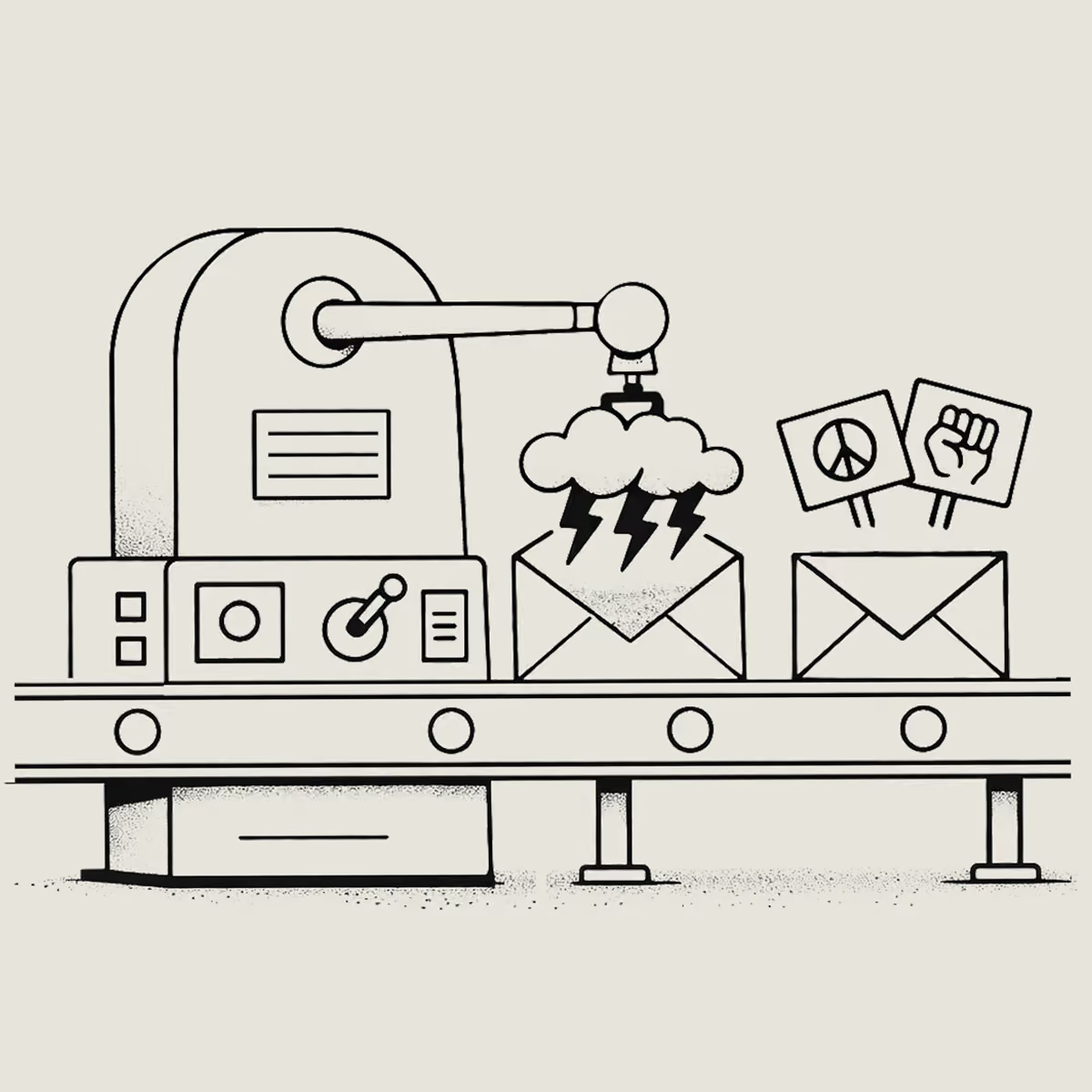
Predicting what someone will click is the easy part. Predicting how they'll feel while doing it is where email marketing gets interesting.
Most email marketers think AI is just about better personalisation. For example, swap a first name, recommend a product, or nudge abandoned carts. Yet, that’s just automation. Useful, of course. But it’s missing something critical: emotional connection.
What if AI could do something much more powerful and craft emails that understand how your audience feels?
Enter mood emails.
Instead of predicting behaviour like a standard automation workflow, these campaigns predict emotional relevance. This can happen in two ways. An AI agent can autonomously read global trends, cultural moments, sentiment signals, and even weather or local events to shape content on its own. Or marketers can tap into the same AI-powered insights to guide subject lines, visuals, and messaging. Either way, the result is the same: emails that feel human, timely, and instantly shareable.
[big-quote-start]
Instead of predicting behaviour like a standard automation workflow, these campaigns predict emotional relevance.
[big-quote-end]
What Are Mood Emails?
Mood emails are AI-generated campaigns that go beyond behavioural triggers. Instead of “user did X, send Y”, they ask:
- What’s the subscriber’s current emotional state?
- What cultural moments, social trends, or global events are shaping how they feel?
- How can we craft content that aligns with this emotion while staying on-brand?
Think of it like predictive personalisation on steroids, instead of predicting ‘actions’, AI predicts ‘emotional resonance’.
For marketers, it’s the moment you stop scrambling to react to whatever your audience just did and start feeling one step ahead! Allowing you to craft emails that land with perfect timing and emotional clarity, almost like you’re reading the room before anyone even walks in.
How AI Makes Mood Emails Possible
An AI prompt or agent can analyse multiple inputs to generate emotionally intelligent email content:
- Sentiment analysis: Evaluates social media activity, customer reviews, or in-app feedback to identify moods and trends.
- Trend detection: Spots emerging cultural or seasonal moments relevant to your audience and their segmentation.
- Contextual signals: Factors like weather, location, or even time-of-day to match emotional triggers.
Example: If a subscriber browses winter crafts online during a snowstorm, AI can suggest and generate an email titled “Cosy Winter Projects to Brighten Your Day”, with visuals and tone tuned to a 'comfort' mood.
Evidence:
- Spotify Wrapped doesn’t just track songs, it interprets behaviour and emotional patterns to create year-end playlists tailored to listener moods
- Netflix adjusts thumbnails, subject lines, and recommendations based on trending cultural moments and inferred moods.
- Retailers like ASOS and Stitch Fix integrate social listening and trend signals to generate emotionally resonant campaigns aligned with cultural moments.
For marketers, it means realising that all those fancy signals (sentiment, trends, context) aren’t just data points. They’re the emotional screws and panels that, once you figure out how they fit together, let you build campaigns that actually feel right to your audience without the usual guesswork.
From Automation → Emotional Intelligence
Traditional automation is like following a cookbook to the letter, the same ingredients, the same timing, the same outcome for everyone, no matter what anyone’s mood is, what they’re craving, or what’s happening in the world that day.
Mood emails, powered by AI, are more like having a personal chef in your kitchen: they anticipate what you like, notice if you’re in the mood for comfort or adventure, and adjust the seasoning based on your personal preferences and even what’s going on in your life and the world around you. Every dish is tailored, thoughtful, and perfectly timed.
Automation example: send an 'Abandoned Cart' email exactly 48 hours after someone leaves something behind.
Mood email example: Using AI-driven content affinity scoring (for example, via a CDP or marketing platform such as Salesforce Einstein, Dynamic Yield, or Klaviyo), send an 'Abandoned Cart' email that automatically adapts to the subscriber’s browsing behaviour. If the system detects they have been viewing cosy, home-focused content, the email displays warm, reassuring copy and soft, seasonal visuals tailored to that interest.
It’s not just about chasing clicks, it is about crafting experiences that genuinely feel human.
[big-quote-start]
It’s not just about chasing clicks, it is about crafting experiences that genuinely feel human.
[big-quote-end]
For marketers, this means moving from rigid recipes to adaptive, emotionally aware campaigns that respond to mood, context, and personal preferences. Think of it like having a personal chef who really knows your audience!
The Human + AI Balance
AI can generate tone, content, and visuals at lightning speed, but it can’t interpret brand personality or plan a long-term emotional strategy.
That’s where human oversight becomes absolutely essential.
Marketers act as editors, curators, and creative directors: shaping the output, deciding what truly aligns with brand values, and ensuring every piece of messaging feels authentic.
AI handles the heavy lifting, analysing patterns, spotting trends, and generating content at scale but left to its own devices, it’s a bit like shaking a magic 8-ball that’s read a few billion emails: it might flash “Send winter discount", “Maybe nudge cart abandonment”, or “Subject line sounds okay… probably”.
Useful? Sort of.
Strategic, empathetic, on-brand? Not a chance.
[big-quote-start]
AI handles the heavy lifting, but your human insight is what turns them into campaigns that truly connect.
[big-quote-end]
Humans take those AI hints and turn them into real connections.
They read the signals, understand the context, and craft campaigns that actually resonate, transforming raw data into messages that feel timely, thoughtful, and emotionally intelligent. It’s the difference between a 'suggestion' and a strategy that makes your audience feel seen.
Evidence: Cambridge University research shows that while generative AI can significantly amplify idea diversity, human judgment is critical to refine concepts and maintain brand integrity.
For marketers, this means AI can give you the data and the prompts, but your human insight is what turns them into campaigns that truly connect emotionally resonant, on-brand, and built to engage real people.
The Strategic Power of Mood Emails
Mood emails work because emotional resonance drives engagement, helping you guide your readers toward what they actually want without the fuss or the boring, hard-sell approach.
- Higher open rates: Emails that reflect a subscriber’s mood feel timely and relevant.
- Increased shareability: People forward, share, or talk about content that “gets them.”
- Brand loyalty: Campaigns that feel human strengthen emotional bonds.
- Brand + Performance = Brandformance: AI ensures efficiency and optimisation, while humans ensure emotional intelligence and a consistent brand voice.
Evidence: OECD’s 2025 report on generative AI found that AI-assisted design expands the 'solution space', helping teams explore broader creative directions early on.
For marketers, this means AI can handle scale and optimisation, but your human insight is what turns data into emails that actually connect. Ultimately, creating campaigns that feel relevant, thoughtful, and genuinely engaging.
Examples of AI Mood in Action
Many leading brands are using AI to tailor experiences based on mood, behaviour, or context, and the results…. Striking!
- Spotify: Suggests playlists based on listening mood → huge engagement spikes and social sharing.
- Netflix: Chooses thumbnails to match each viewer’s emotional tone → higher click-through and longer sessions.
- Starbucks: Recommends drinks based on weather, time, and past orders → more relevant offers, higher app engagement.
- Pinterest: Serves Pins that match mood and aesthetic preferences → increased discovery and session length.
- Duolingo: Adjusts tone of reminders and explanations to match user behaviour → better retention and consistent practice.
For marketers, this shows that AI can spot emotional triggers at scale, but human insight is key to turning those signals into campaigns that truly connect and resonate.
Takeaway: AI as a Creative Amplifier, Not a Replacement
The inbox is no longer just a broadcast channel. It is a predictive, emotional ecosystem. AI lets you respond to how people feel, not just what they do, turning every email into an opportunity to connect on a human level.
Stop thinking of AI as simply "automation plus personalisation”.
Start thinking of it as a creative amplifier, a tool that helps your team craft emails that truly resonate, spark connection, and drive conversion.
Mood emails do not just anticipate actions; they anticipate emotion. The brands that master this are the ones whose emails do not just get opened, but get read, remembered, and shared.
[big-quote-start]
Mood emails do not just anticipate actions, they anticipate emotion.
[big-quote-end]
For marketers, this means using AI to identify emotional cues at scale while applying human insight to craft campaigns that genuinely connect, build loyalty, and leave a lasting impression.
If you would like to learn more about working with an agency that combines AI and human insight, get in touch with us.
Sources:
https://www.jbs.cam.ac.uk/2025/human-brain-vs-ai-what-makes-better-decisions/
https://agentiveaiq.com/blog/how-ai-transforms-email-marketing-with-real-time-intelligence
https://www.simon.ai/case-studies/build-better-cross-channel-marketing
https://glance.com/row/blogs/glanceai/ai-trends/ai-in-email-campaigns
https://www.benchmarkemail.com/blog/ai-driven-sentiment-analysis/
https://blog.hubspot.com/marketing/ai-personalization-marketing

Please try again, or reach out to us at hello@elespacio.net.